AI Ticket Scams | How AI Is Amplifying Modern Ticket Scams on Reddit
Our analysis found that modern ticket scams now follow a repeatable five-stage fraud funnel. Instead of manually scamming one buyer at a time, scammers use AI to generate hundreds of listings, identify interested buyers, create personalized fake proof on demand, build trust, and divert payments.
By J.M
Moderator of r/TicketResale · VouchFirst Security Lead
Published July 15, 2026
Cite as: VouchFirst Threat Intel Report (2026)
Two Minute Summary
Ticket fraud has evolved from isolated, amateur Photoshop attempts into a highly systematized, 5-step funnel protocol. AI has enabled mass-creation of hyper-personalised posts and dms on Reddit. AI has also enabled editing of images and HTML code for emails and websites. We have found that previous advice on buying tickets online is outdated.
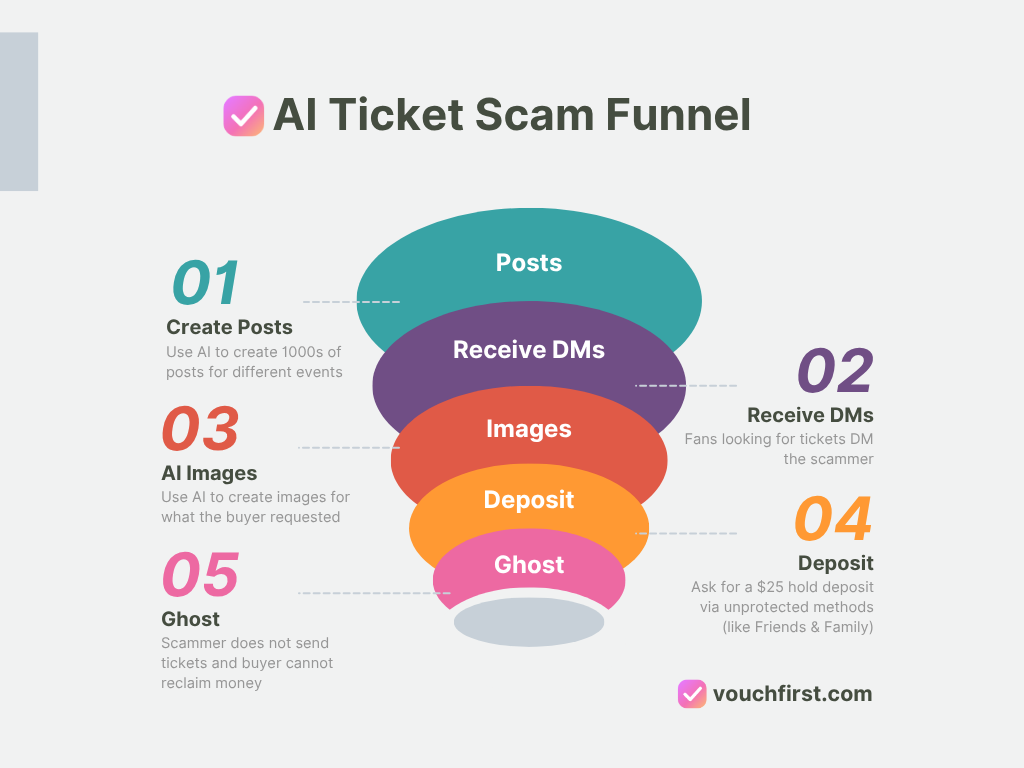
Our July 2026 threat intelligence study of 5,000 active social media listings maps out this operational shift. Scammers no longer rely on manual, one-off manipulations; instead, they run automated, multi-stage pipelines to capture and exploit desperate fans.
- The Industrialized Funnel: Fraud is managed like an enterprise sales sequence, moving targets systematically through a standardized five-stage protocol: programmatic posting, lead capture, dynamic image editing, trust baiting, and payment diversion.
- The Security Imperative: Because static media proof can now be perfectly faked on demand, the secondary market must completely abandon screenshots as proof of authenticity and use other verification methods.
2. How AI Industrializes the Fraud Funnel
Historically, ticket fraud operations were bottlenecked by manual administrative tasks. Sourcing seating charts, editing individual photos, mimicking the localized style of local fanbases, and generating individual replies required human effort. Generative AI has resolved these scaling limitations.
Threat actors can deploy automated scripts that use LLMs to mass-generate highly precise listings optimized for specific languages, artist fanbases, and regional subreddits. This shifts the scam structure from passive, isolated posts into an optimized marketing funnel designed to convert attention into direct messages.
- 1
1. Scammers programmatically create hundreds of listings using AI
AI helps scammers quickly create many different posts for sold-out concerts, sports games, and events. They can change the artist, location, date, and wording to target different groups of buyers.
- 2
2. Interested buyers message them
The fake listings are designed to get buyers to send a direct message. During the conversation, the scammer learns exactly which tickets the buyer wants, including the date, section, number of seats, and budget.
- 3
3. They create fake proof for that buyer
The scammer can take a real ticket screenshot, remove the original seller's watermark with AI, and change the seat, date, or name so the proof matches what the buyer asked for.
- 4
4. They gain trust, then change the payment method
The scammer may first promise to accept PayPal Goods and Services to appear safe. After gaining the buyer's trust, they pressure them to use a payment method with little or no buyer protection.
3. Case Study: An AI Scam Post about BTS Paris
We tracked a specific scammer who has been flooding Threads, Reddit, and X with automated listings. This operation represents Part 1 of the AI Scam Funnel (Mass Posting). To maximize their reach, the operator prompts an LLM to write a single base template, instructs it to "make the post look safe and trustworthy," and then programmatically rewrites and translates it into multiple languages to target international fanbases.
While the listing contains several technical and logical red flags, a desperate, high-stress fan looking for sold-out tickets is highly unlikely to notice them. Driven by FOMO (Fear of Missing Out), the buyer bypasses critical evaluation and immediately initiates a direct message conversation.
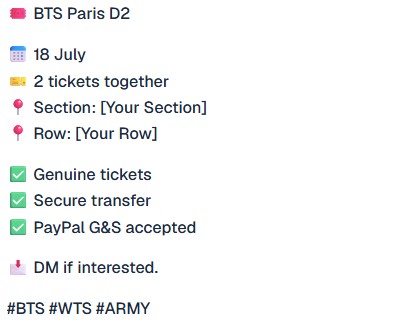
Analysis of the post in Figure 2 reveals the subtle AI footprints that go unnoticed by anxious buyers:
- Mass posting hints: Because the script cross-posts hundreds of automated listings simultaneously, the operator forgot to fill in the specific seat parameters. This left raw, generic template placeholders like
[Your Section]and[Your Row]fully visible in the public post. - Excessive emoji use: The LLM's prompt to look "safe" results in an unnaturally high emoji density. As documented by Netcraft (opens in a new tab), this expressive formatting is a classic footprint of automated text generation designed to manufacture trust.
- Cross-Platform Formatting Collisions: The automated script published identical text blocks containing extensive hashtag strings (such as
#BTS #WTS #ARMY) to Threads, X, and Reddit. The automation fails to realize that Reddit does not use hashtags, making the copy-paste nature of the campaign obvious under scrutiny.
4. The Watermark Crisis: July 2026 Dataset Findings
To measure how secondary market participants evaluate risk in this new threat environment, the VouchFirst research team performed an empirical study in July 2026. We analyzed a random sample of 5,000 public peer-to-peer secondary market listings across active resale communities, including r/TicketResale and r/Tickets.
Our investigation showed that 70% of consumer transactions relied on image watermarks as their primary indicator of seller authenticity. Buyers widely believe that a username written over an order confirmation screen confirms real ticket possession.
This reliance creates a severe security vulnerability. Because generative image editing models can modify visual assets in real time, watermarks are no longer effective defenses. Threat actors bypass these checks easily, using them to create a false impression of security.
5. AI Image Forgery & Watermark Removal
Modern threat actors do not require advanced graphic design skills. Instead, they scrape genuine proof images posted by legitimate sellers on public forums. They process these source files through automated inpainting models, which analyze the surrounding visual context to seamlessly erase watermarks and clean the image background.
Once a buyer provides their target seats in a DM, the scammer uses simple overlays to write the requested seat numbers, dates, and names back onto the unwatermarked template.
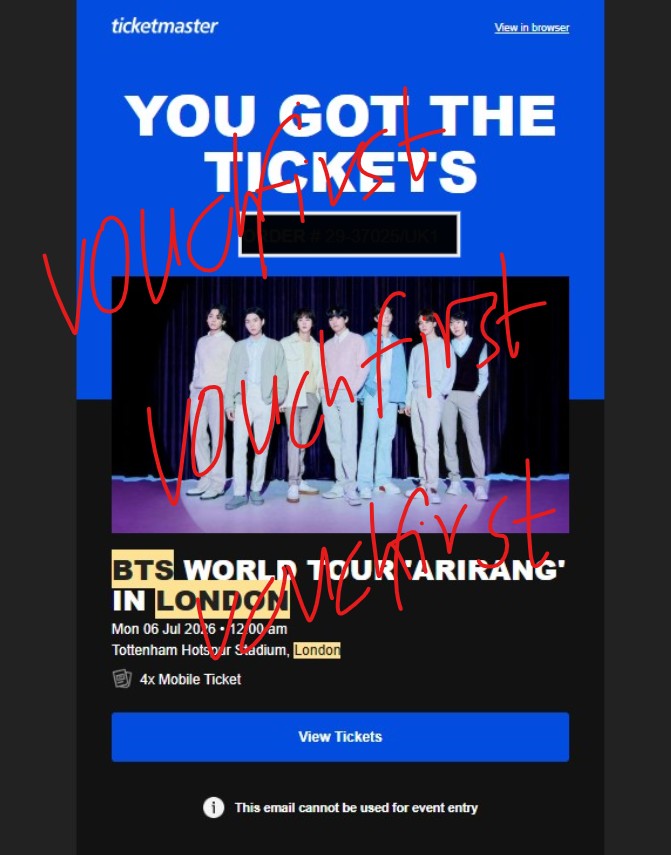
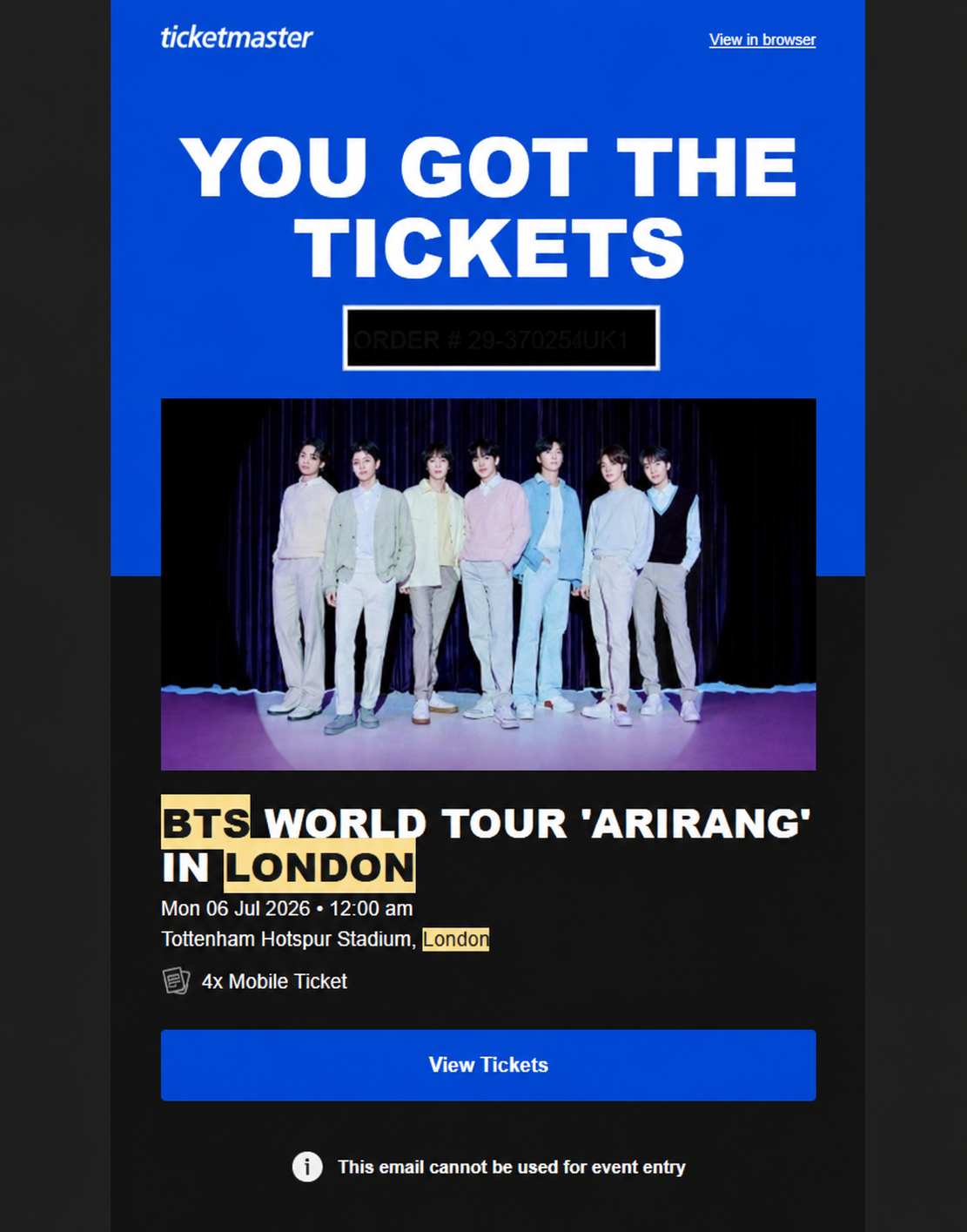
This visual editing process exploits how consumers evaluate trust. Financial institutions like Barclays (opens in a new tab) have highlighted that one in five young consumers will fully trust a social media listing if the seller provides a standard order confirmation screenshot. In an era where image modification is automated, static screenshots have become completely unreliable.
6. Vibe-Coded Phishing & HTML Email Forgery
As development models drastically reduce the time required to deploy functional web applications, threat actors are moving beyond static image manipulation. Instead of flat screenshots, they leverage automated code-generation pipelines to build fully interactive, web-based phishing environments. We have documented two distinct, highly sophisticated cases of this interactive forgery in the field.
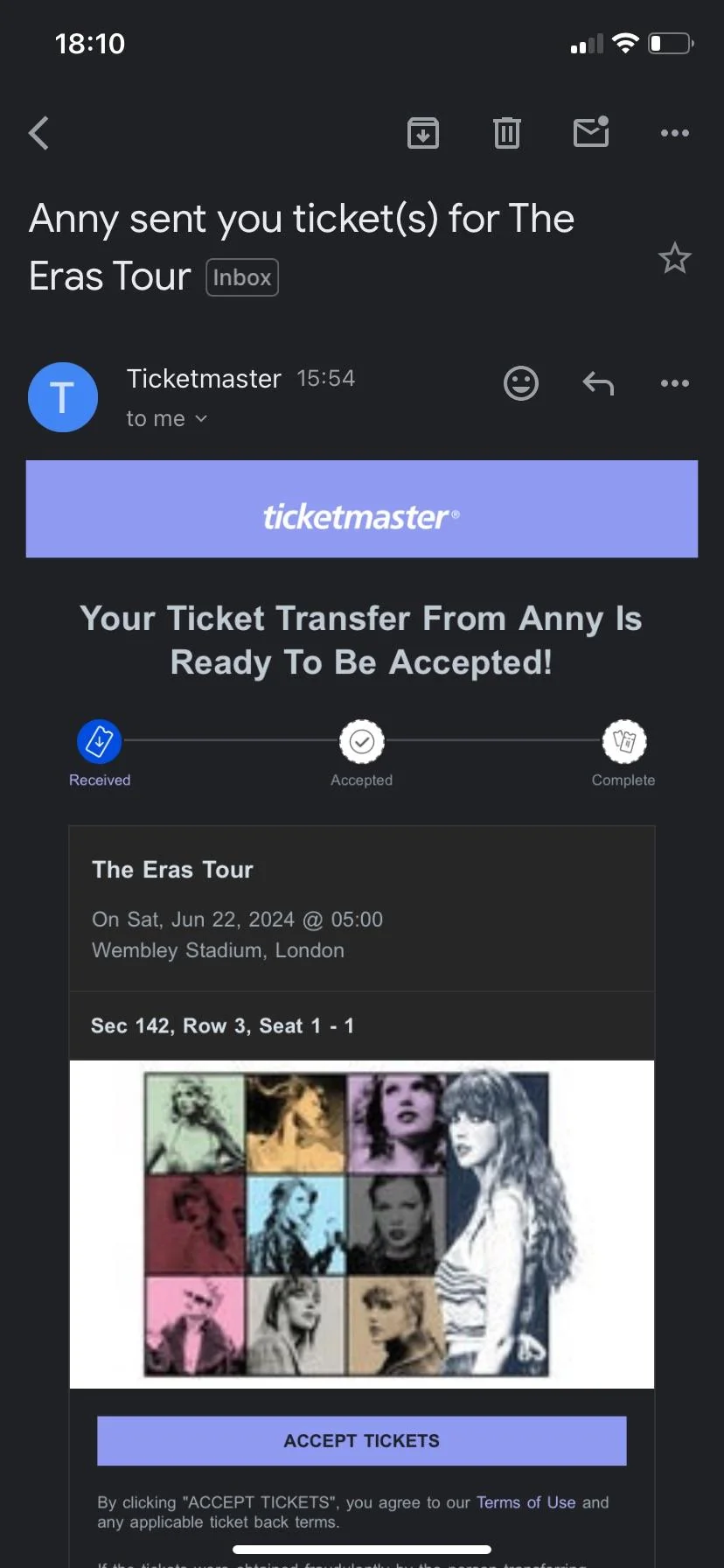
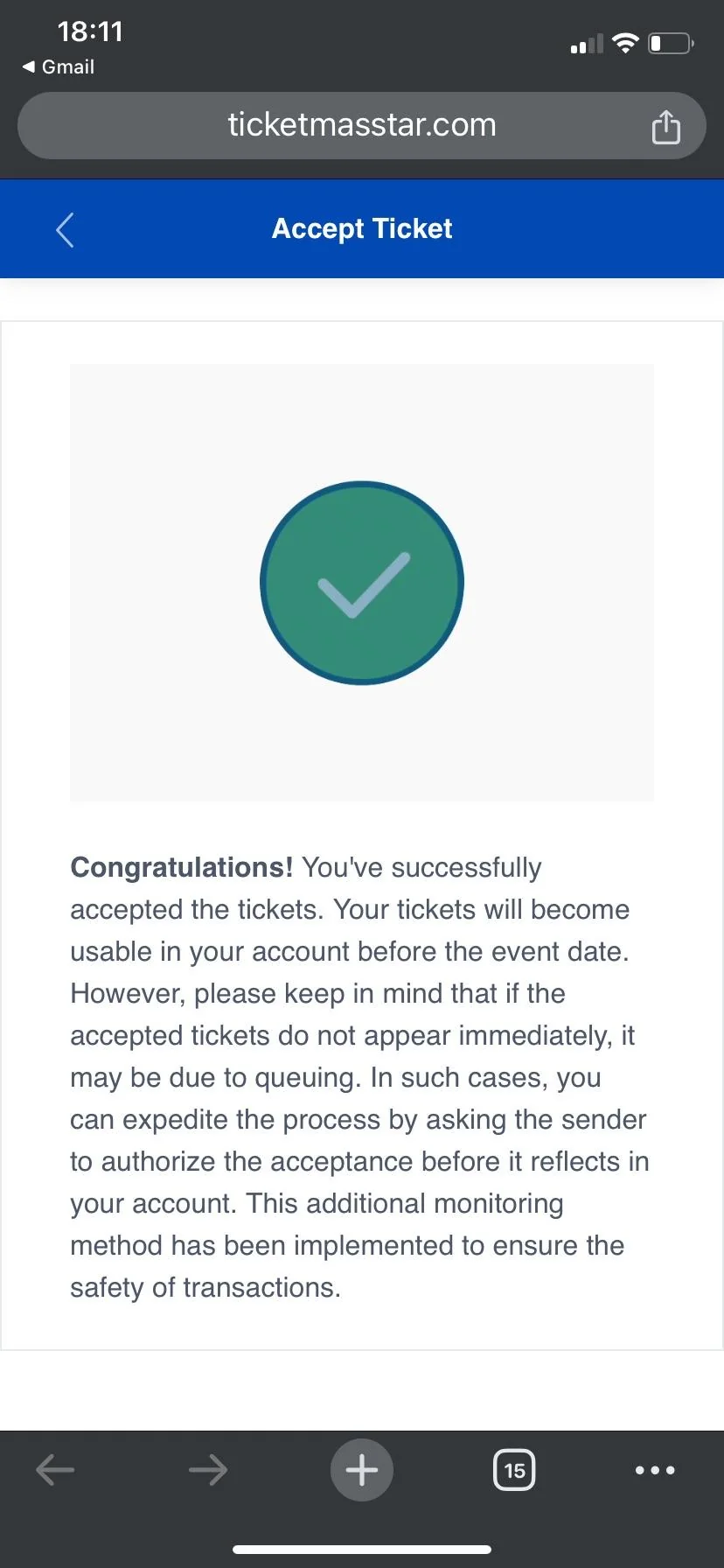
Case Study 1: Spoofed HTML Confirmation Emails & Lookalike Domains
In this scenario, the scammer bypasses peer-to-peer verification by sending a fake transfer notification directly to the victim's inbox. This email mimics official transactional layouts to convince the recipient that their ticket transfer is pending, prompting them to click through to a malicious external site.
Case Study 2: Live Verification Forgery via Discord & FaceTime
To counter cautious buyers who refuse to buy without video verification, scammers now offer to join a live video call or share their screen. During the call, the seller shares their screen and displays what looks like an official app interface actively executing the ticket transfer right before the buyer's eyes.
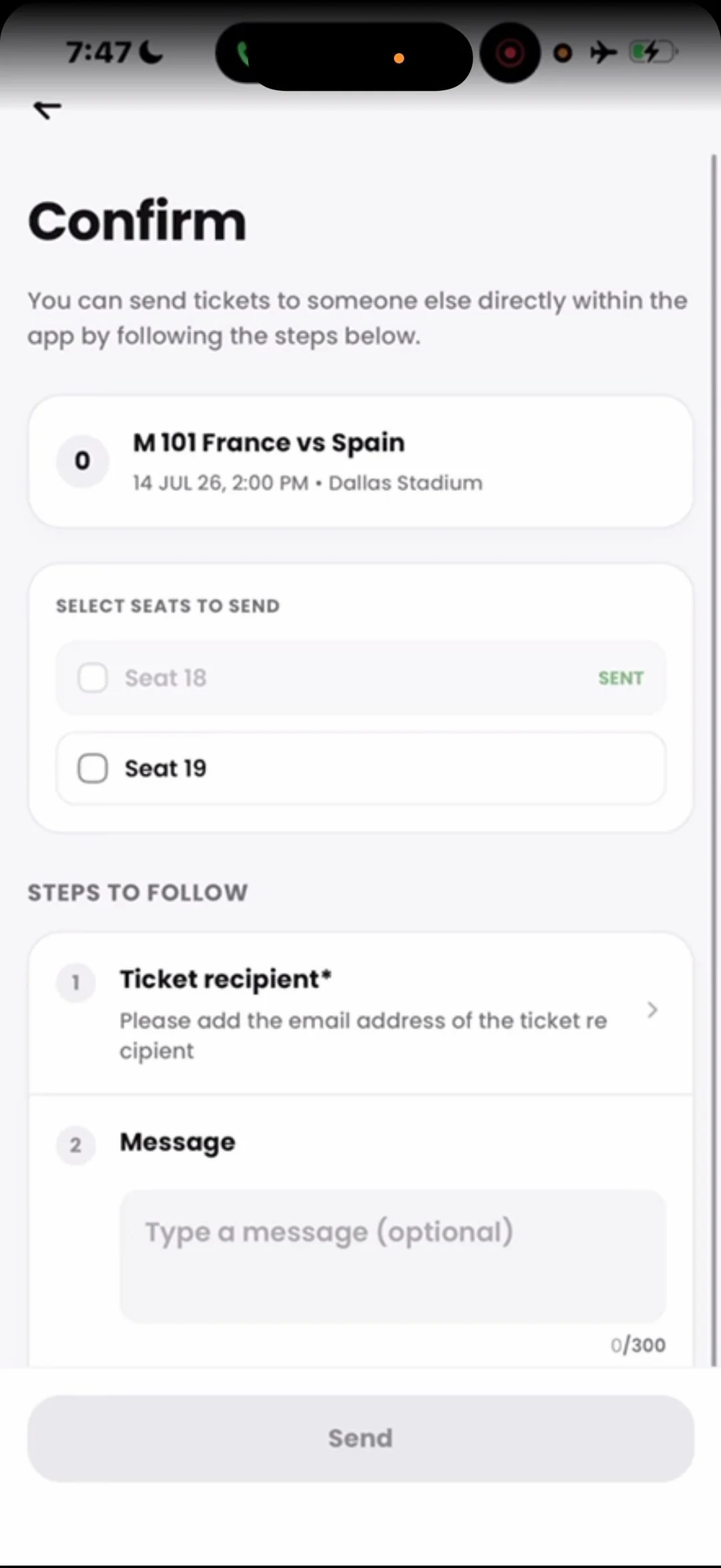
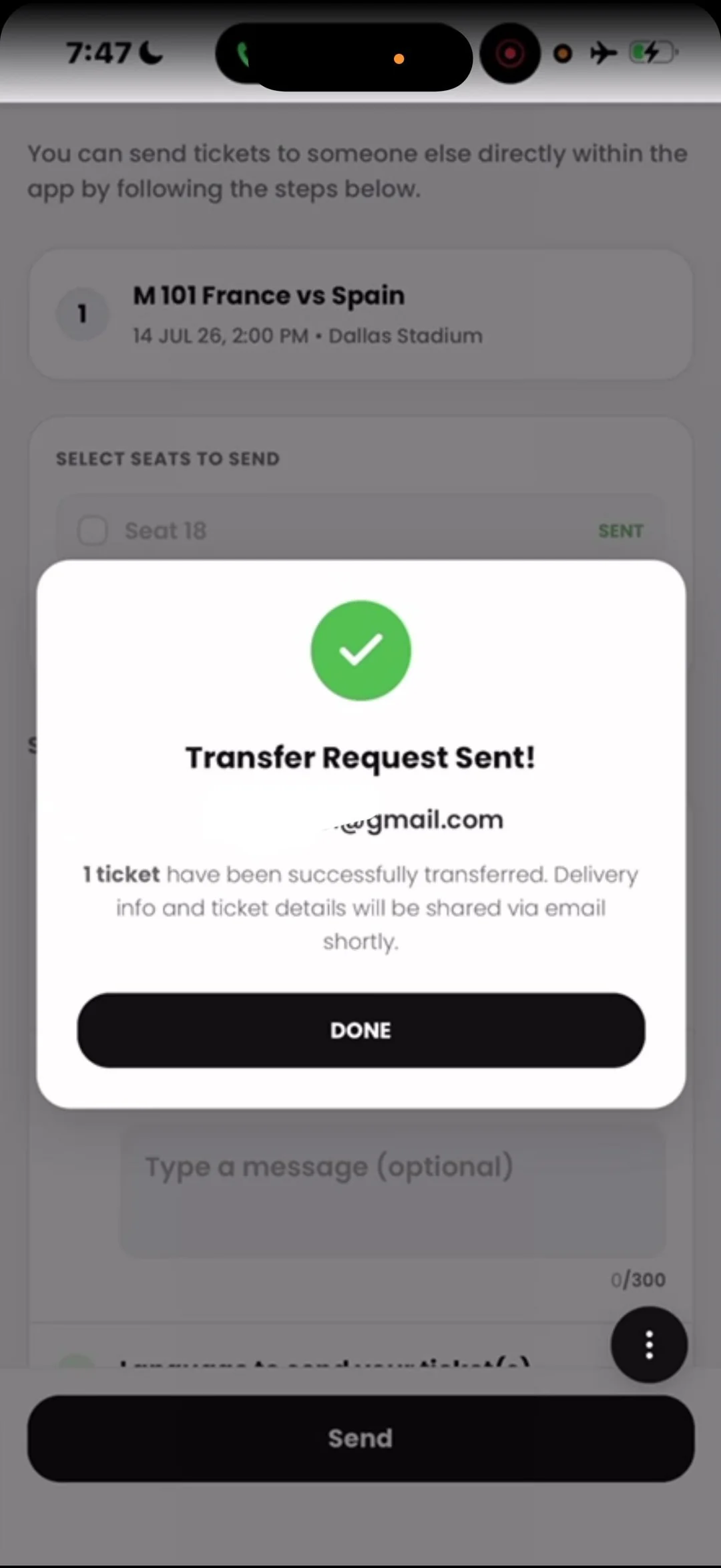
Both case studies highlight a critical shift in adversary capabilities. By creating local mock interfaces with zero backend database infrastructure, scammers can bypass standard screen-sharing checks. When a target buyer witnesses a real-time transfer process over a live stream, their psychological risk threshold is cleared, despite the underlying action being entirely simulated.
7. The PayPal G&S "Bait-and-Switch" Model
Because buyers have been trained to look for safe payment methods, scammers write "PayPal Goods & Services accepted" directly into their public posts to encourage DMs.
Once in private messages, the seller switches tactics and asks for a small deposit—typically around $25—to hold the ticket while they resolve payment issues. They argue that a Goods & Services fee is unnecessary for such a small transfer, pushing for Friends & Family or Zelle instead. As PayPal explicitly warns (opens in a new tab), Friends & Family transfers are not covered by buyer protection. A Goods & Services payment is also not proof of a real ticket, as eligibility depends entirely on PayPal's Purchase Protection terms (opens in a new tab).
8. The Future of AI Scams: FaceTime Deepfakes & Custom Targeting
As buyers become more cautious, scammers are adjusting their tactics. Many security advocates suggest insisting on a live FaceTime call or a real-time screen share to confirm tickets. While this is currently a useful hurdle, the threat model is changing.
We anticipate the emergence of live-rendering deepfakes during video calls. Real-time video filters and voice overlays can mimic genuine sellers, letting automated operations simulate live screen shares of native ticketing apps.
We are also seeing the development of automated parsing tools that monitor social channels for high-intent keywords (like "ISO Taylor Swift tickets"). These engines instantly construct and send highly customized direct messages to target fans, automating the entire social engineering process.
9. What to Do If You Got Scammed
If you have already transferred funds to an unverified seller, taking quick action can help secure your accounts and payment methods. You can find a step-by-step recovery workflow in our guide: What to do if you got scammed online.
To learn more about navigating secondary transactions safely, read our comprehensive resource: The Complete Guide to Buying Tickets on Reddit Safely. You can also check suspicious profiles against our database in the VouchFirst Scammer Directory.
Frequently Asked Questions
Can generative AI remove watermarks from ticket screenshots?
Yes. Generative image tools remove watermarks and rewrite names, seats, and dates to match your requested details. A watermark is no longer reliable proof of ticket ownership.
Why do ticket scammers ask for only a $25 deposit?
Scammers use micro-deposits because they lower the buyer's perception of risk. A buyer who refuses to risk the full ticket price may still agree to a small $25 deposit. With automation, securing twenty $25 deposits is highly profitable.
Does an AI-written post mean the seller is a scammer?
No. Legitimate sellers may use AI assistants to clarify their posts or translate details. Rather than focusing on writing style alone, evaluate the user's posting history, location data, and active seating details.
What should I do if I have already sent money to a scammer?
First, document all evidence and save screenshot records of your chat history. Contact your bank and payment application immediately, and report the transaction directly on ReportFraud.ftc.gov (opens in a new tab) (US) or Report Fraud UK (opens in a new tab).
Media & Research Contacts
We share raw dataset telemetry, mock template examples, and threat patterns with academic research groups, consumer protection agencies, and credentialed journalists.
1. The Social Media Ticket Scam Epidemic
Unregulated peer-to-peer communications on social media are now the primary vector for secondary ticket fraud. Empirical data from the UK Home Office (opens in a new tab) confirms that consumer losses exceeded £1.6 million across reported cases annually, with approximately 50% of these incidents originating directly on social media channels. Globally, the threat scale is verified by the US Federal Trade Commission (FTC) (opens in a new tab), which logged $2.1 billion in total losses originating on social networking platforms, emphasizing the vulnerability of direct message spaces.
This exploitation pattern intensifies during high-demand international events. Security advisories from the FTC warning of World Cup ticket scams (opens in a new tab) highlight how threat actors exploit highly localized demand surges. When official tickets sell out, consumers seek tickets in unverified peer-to-peer spaces, where they encounter sophisticated scam campaigns.
The primary methodologies utilized by threat actors to deceive buyers are analyzed in the VouchFirst report on identifying ticket scam types on Reddit.